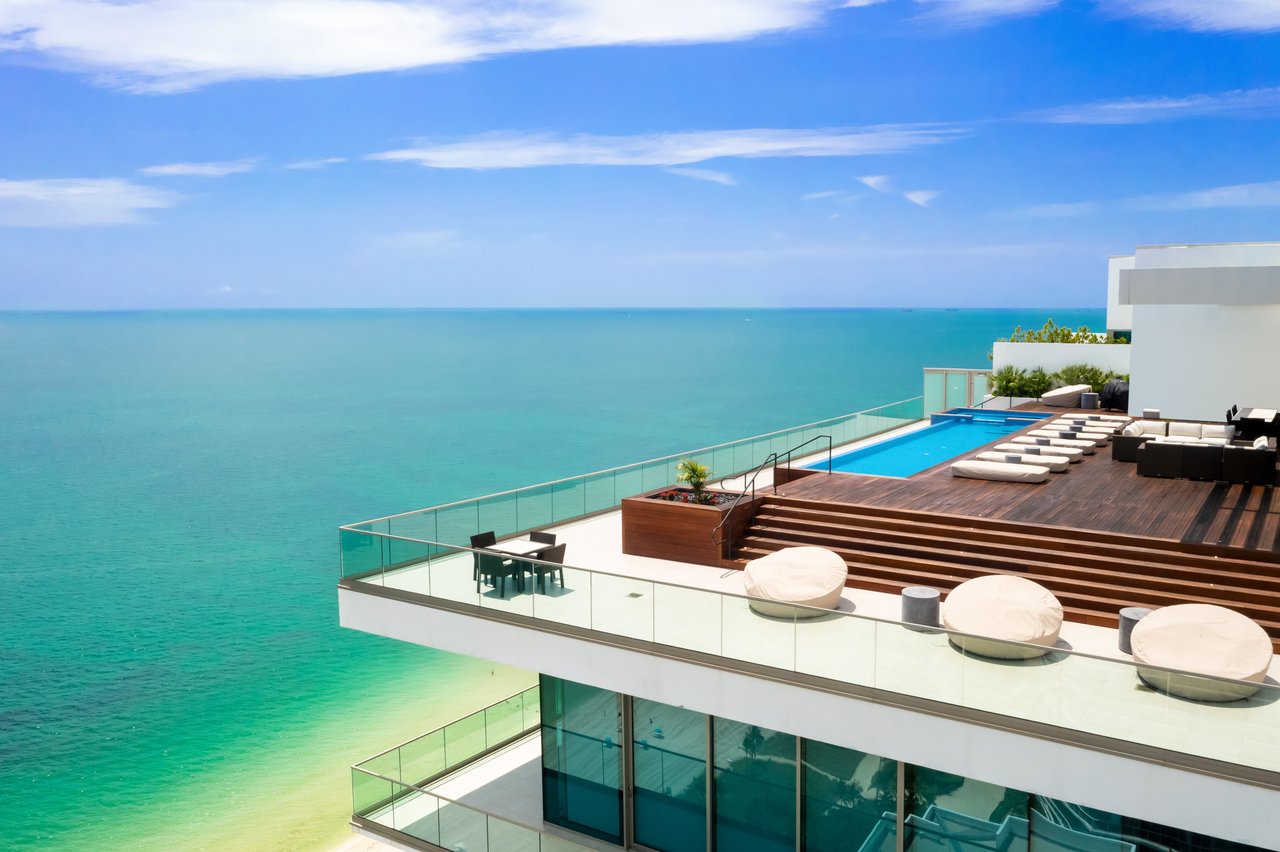
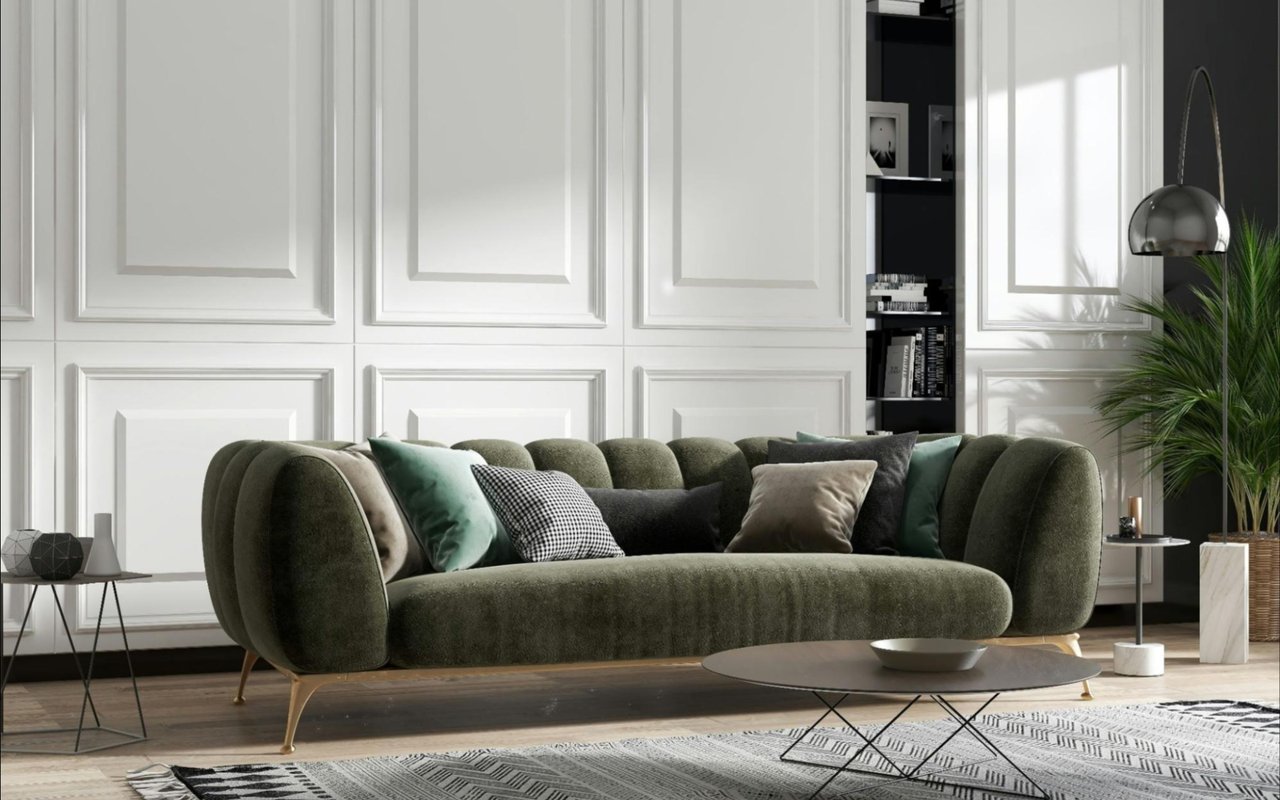
In Palm Beach County's hyper-luxury market, Modern Classic isn't a design theory borrowed from an interior magazine. It's a specific, physical formula that developers, architects, and buyers have converged on to define what a $2M to $20M+ home should look like in 2026. It bridges the region's architectural heritage with the indoor-outdoor demands of modern South Florida living, and it has become the antidote to two styles that have fallen out of favor: the heavy, dark Addison Mizner Mediterranean plaster of the 1990s, and the clinical white-box contemporary that followed.
For buyers touring coastal enclaves in Delray Beach, Gulf Stream, and Jupiter, understanding this style isn't optional. It's the lens through which nearly every listing over $3M is now being marketed, priced, and sold. This guide walks through what Modern Classic actually looks like on tour, where inventory is concentrated, what the market data reveals, what to inspect before you close, and why this aesthetic has become the most financially efficient architecture in the local luxury market.
What Modern Classic Actually Looks Like in Palm Beach County
When walking through a Modern Classic home in Delray or Jupiter, the style materializes in specific, repeatable details rather than abstract design principles.
The facade is where the marriage of eras begins. Buyers will see clean, symmetrical geometry punctuated by traditional accents — smooth-coated white or ivory stucco paired with authentic British West Indies features like bracketed eaves, exposed rafters, and deep overhanging rooflines, or Palm Beach Regency symmetry with grand entry columns and crisp stone balustrades.
The glazing is the tell. Unlike clinical modern structures that use completely frameless commercial glass, Modern Classic homes use thin dark-bronze or black aluminum-framed impact windows, often divided into traditional multi-pane patterns that ground the architecture in the region's history while satisfying the Florida Building Code's High-Velocity Hurricane Zone requirements.
Underfoot, the flooring is dominated by large-format honed European limestone, split-face shellstone, or wide-plank wire-brushed European white oak. High-gloss polished marble — a hallmark of the 1990s Mediterranean era — has been almost entirely replaced by matte, organic textures that feel warmer and hide the etching caused by salt air tracking indoors. Ceilings feature clean-lined shiplap or tailored tongue-and-groove details, often warmed with stained cypress or bleached walnut accents in great rooms.
The overarching message that agents communicate to buyers is clear: you get the structural integrity and open floor plan of an ultra-modern home without sacrificing the cozy, prestigious, and timeless feel of classic Florida estate living.
The Architects & Builders Driving the Style
A small circle of local firms drive nearly all of the Modern Classic inventory in the market, and knowing who they are helps buyers evaluate a home's pedigree instantly.
Affiniti Architects, based in Boca Raton and Delray Beach, is a powerhouse firm highly visible in coastal enclaves like Gulf Stream and Ocean Ridge. They've mastered the Transitional West Indies look — marrying traditional Caribbean silhouettes, pitched roofs, and shutter accents with massive open-concept floor plans and glass walls. Randall Stofft Architects in Delray Beach is known for his signature "couture architecture" and dominates the high-end custom home sector, taking classical proportions like symmetry, grand entries, and loggias and stripping away the fussiness to leave clean, crisp silhouettes.
On the construction side, SRD Building Corp — led by brothers Steve and Scott Dingle — dominates elite enclaves like the Royal Palm Yacht & Country Club, specializing in ultra-luxury turnkey estates that pair traditional exterior symmetry with state-of-the-art Crestron automation and green building certifications. Courchene Development, a generational luxury builder, frequently collaborates with Affiniti Architects on custom coastal estates known for crisp structural execution that feels permanent rather than trendy.
Standout projects buyers can reference as benchmarks include Bluewater Cove in Gulf Stream (Affiniti Architects + Courchene Development), 1177 Moderne on George Bush Blvd in Delray Beach — a boutique development frequently cited by agents as the multi-family benchmark for the style — and SRD's recent Sabal Palm Drive Estates in Royal Palm, which feature imposing street-front symmetry that opens entirely at the back via automated pocketing glass walls to zero-edge pools and deep-water docks.
Where to Find Modern Classic Homes: Neighborhoods & Communities
Modern Classic inventory in Palm Beach County is heavily concentrated in a handful of hyper-exclusive geographic pockets. Because the style relies on sweeping window grids, bright open layouts, and refined coastal accents, the concentration varies significantly between country club resales and coastal new builds.
Coastal Enclaves & Barrier Islands
The Seagate (Delray Beach Barrier Island) is ground zero for custom Modern Classic beach estates. Located just south of Atlantic Avenue, prices run from $3M to $12M+, with roughly 10 to 15 active listings fitting the style at any given time. The mix leans heavily toward major renovation — about 30% new construction and 70% teardown transformations of 1970s and 1990s homes by firms like Randall Stofft.
Gulf Stream is a private, historic coastal town characterized by its signature Australian pine canopy. Highly protective of its architectural scale, it strongly accommodates the British West Indies iteration of the style. Waterfront pushes the price ceiling from $5M to $40M+, with 8 to 12 active listings town-wide at any time. Strict lot coverage codes mean inventory skews toward custom new construction (40%) or perfectly executed modern renovations (60%).
Northern Yachting & Luxury Hubs
Admirals Cove (Jupiter) is a premier ultra-luxury waterfront and golf community where boaters can dock deep-draft mega-yachts directly behind their estates. Prices range from $4M to $30M+, with 20 to 25 active listings — the highest concentration of Modern Classic inventory in northern Palm Beach County. Because the neighborhood is completely built out, the mix is roughly 20% new construction and 80% substantial custom remodels, as builders strip 1980s and 90s properties to their concrete blocks and refit them with massive impact glass walls and clean transitional trims.
The Ritz-Carlton Residences (Jupiter) offers a golf-fronting alternative, wrapped around a Jack Nicklaus signature course. Prices sit between $3.5M and $8M+, but inventory is extremely tight — typically fewer than 5 active listings. The homes came out of the ground with the right structural bones (coastal clay tile roofs, symmetry), so most transactions here are refreshes rather than full renovations.
Western Estate & Country Club Communities
Mizner Country Club (Western Delray Beach) has become one of the most active hubs for the transitional architectural shift. Historically Mediterranean, the community has seen a massive push to strip away heavy plaster in favor of the Modern Classic aesthetic. Prices range from $1.5M to $5M+, with 12 to 18 active listings, weighted heavily toward turnkey renovations (90%) over new construction (10%). Buyers should note that mandatory equity club membership adds an additional $170,000 to $275,000 upfront acquisition cost.
Stone Creek Ranch, on the Delray-Boca border, is an ultra-exclusive enclave of just 37 multi-acre compound estates. Prices run $15M to $50M+, with rarely more than 2 or 3 properties active at once. Newer builds here reject traditional dark Mediterranean design entirely, opting for grand French-Classical silhouettes wrapped around ultra-crisp glass interiors.
Market Snapshot
Neighborhood / Community | Est. Active Inventory | Median Asking Price | New vs. Resale Mix |
|---|---|---|---|
The Seagate (Delray) | 10–15 Homes | ~$5.5M | 30% New / 70% Reno |
Gulf Stream | 8–12 Homes | ~$12.5M | 40% New / 60% Resale |
Admirals Cove (Jupiter) | 20–25 Homes | ~$11.0M | 20% New / 80% Reno |
Mizner Country Club | 12–18 Homes | ~$2.1M | 10% New / 90% Reno |
Stone Creek Ranch | 1–3 Homes | ~$28.0M | 100% Custom Estates |
The buyer's choice comes down to lifestyle priorities. For a brand-new, walkable beach lifestyle, target the Delray Barrier Island and Seagate corridor. For security, expansive acreage, or a dedicated deep-water dock to support a yacht, focus on Admirals Cove or the western mega-estates.
Price Ranges & Current Market Data
The financial data tells a clear story: Modern Classic isn't just a stylistic preference — it's currently the most financially efficient architecture for driving top-tier valuations and compressed transaction timelines in Palm Beach County.
Over the past 12 months, the median sale price for single-family Modern Classic homes in East Delray Beach and the barrier island sits at $5,850,000. That's a substantial premium over the broader luxury segment, which sits closer to $3,900,000 and reflects the drag of older, un-renovated inventory. In Jupiter's coastal and gated golf communities, the median climbs to $7,400,000, driven upward by custom renovations in deep-water yachting enclaves like Admirals Cove and the Ritz-Carlton Residences.
Price per square foot behaves like two entirely different currencies depending on whether the asset sits on coastal sand or a golf fairway. The Seagate runs $1,200 to $1,850 per square foot, with the premium driven by Atlantic Ave walkability. Gulf Stream commands $1,900 to $3,200+ per square foot on private oceanfront lots. Admirals Cove ranges $1,400 to $2,500, dictated by linear feet of deep-water dockage. Mizner Country Club sits at $550 to $850, with lower land costs balanced against club equity buy-ins. Stone Creek Ranch trades at $1,500 to $2,200, reflecting the scale of multi-acre compounds.
The velocity data is where the style's dominance becomes undeniable. The broader luxury market averages 135 to 145 days on market — a figure dragged upward by older architectural styles, homes requiring floor plan restructuring, and over-customized contemporary resales. Modern Classic inventory averages 45 to 65 days. Because the style uses neutral finishes and features open layouts, it behaves like a clean canvas, allowing high-net-worth buyers to move in immediately without executing a 12-to-24-month structural overhaul.
The most telling data point is the style delta within identical communities. In Mizner Country Club or Admirals Cove, an original Mediterranean home with dark columns, arched entries, and compartmentalized rooms typically trades near land value — $350 to $450 per square foot. When that same asset is stripped to the concrete block, opened up, fitted with rectangular impact window grids, and finished with light transitional wood and stone, it commands $650 to $900+ per square foot on resale. The market applies a 35% to 50% pricing premium purely for the layout efficiency and aesthetic shift. Buyers actively penalize structural obsolescence, choosing to pay a premium upfront to avoid the local permitting and construction timelines required to convert a traditional home themselves.
What to Inspect When Buying a Modern Classic Home
The style's signature elements — wide-plank floors, floor-to-ceiling glass, and intensive interior millwork — face unique challenges from South Florida's climate. Purchasing a multimillion-dollar Modern Classic estate requires looking past the staging to evaluate specific vulnerabilities during the inspection period.
Flooring is the first concern. The signature look is a wide-plank floor, typically 8 to 12 inches wide, in a light white oak finish. Solid wide-plank hardwood laid over a ground-level South Florida concrete slab is a critical structural risk. Wood is hygroscopic — it absorbs and releases atmospheric moisture — and in a 70%+ relative humidity coastal environment, solid wide planks will inevitably cup (edges curling upward) or crown (the center rising) as moisture migrates up through the slab. Buyers should confirm the home uses multi-layer engineered white oak with a thick wear layer; the cross-ply plywood core counteracts lateral expansion and prevents buckling. During inspection, have your inspector run a pinless moisture meter along the transitions where wood meets sliding glass doors leading to loggias or pool decks. Readings above 12% indicate a failing subfloor moisture barrier.
Millwork and paneling carry a silent risk. Modern Classic interiors are defined by vertical shiplap, floor-to-ceiling tongue-and-groove paneling, and deep applied moldings. When luxury homes are built or heavily remodeled, the millwork is often installed before the HVAC system has fully conditioned and dehumidified the space. When the AC finally runs, the wood shrinks, causing gaps, caulking blowouts, and split joints. Worse, if wood paneling is fastened directly to exterior-facing concrete block walls without a proper vapor barrier, moisture bleeds through the porous stucco and fuels mildew growth hidden behind the panels. Ask for thermal imaging along the base and mid-sections of heavily paneled accent walls — cool moisture pockets show up as dark color anomalies on the infrared spectrum.
HVAC dynamics matter more than in a conventional home. The defining Modern Classic floor plan is a massive great room integrating kitchen, dining, and living areas, frequently opening to the outdoors via pocketing glass doors. Cooling a 3,000+ square foot open space with 14-foot ceilings and high solar heat gain requires advanced climate engineering. A single standard air handler will short-cycle — cooling air quickly near the thermostat while leaving distant corners humid and stagnant, which breeds mold. Look for a zoned variable-speed system paired with a dedicated whole-home dehumidifier (Aprilaire or Santa Fe) integrated into the ductwork. A true Modern Classic estate should also use linear slot diffusers tucked into the ceiling architecture rather than standard square grates, and the system must maintain indoor humidity between 40% and 50% even when sliders are frequently operated.
Impact windows are a code and quality question. Meeting the Florida Building Code's HVHZ requirements while keeping the sightlines clean requires high-end window engineering. In properties built by top-tier teams, look for commercial-grade impact windows from manufacturers like ES Windows or Marvin Coastline. Check for delamination — cloudiness or bubbling at the corners where the impact interlayer is separating from salt air exposure — and scratched low-E coatings. Inspect the dark aluminum frames for bubbling or chalking, which indicates galvanic corrosion from coastal salt spray eating through a substandard powder coat.
Insurance is the final variable, and it's the one that surprises the most buyers. High-end finishes like honed limestone, custom white oak millwork, and automated pocketing glass doors drive reconstruction cost per square foot far above standard builder-grade materials. Standard insurance policies base Coverage A dwelling limits on regional building averages, so in a catastrophic loss, a standard policy won't pay enough to replace custom $30-per-square-foot limestone or imported cabinetry. On top of that, state-backed Citizens Property Insurance excludes coverage for homes with a dwelling replacement cost exceeding $700,000 in most of the state ($1M in Miami-Dade and Monroe). Buyers must secure coverage through specialized High-Net-Worth private client insurers like Chubb, PURE, or Vault, which use an HO-5 policy form and offer Guaranteed Replacement Cost — ensuring custom interior finishes are fully rebuilt to original specifications without depreciation or arbitrary policy caps.
HOA & Architectural Review Considerations
Luxury buyers often assume a multimillion-dollar budget grants creative freedom, but Palm Beach County's most prestigious communities maintain strict Architectural Review Boards that act as gatekeepers, sometimes at the direct expense of modern design trends.
Mizner Country Club maintains a highly active ARB. The community was conceived by Toll Brothers in the early 2000s as a tribute to Addison Mizner's Mediterranean Revival legacy — barrel-tile roofs, heavy arches, warm ochre palettes. The ARB historically fought the white-box contemporary movement, so achieving a Modern Classic look here requires a Transitional Mediterranean compromise: you must keep a pitched roofline, but you're permitted to use clean white stucco, strip away heavy ornamental window flourishes, and install simplified black or bronze window grids.
Admirals Cove is supervised by a strict Architectural Design & Review Board. Because the community is entirely built out, the ADR spends most of its time managing custom teardowns and total structural remodels. It's highly receptive to the British West Indies version of Modern Classic architecture, but strictly regulates lot coverage, height restrictions, and docking footprints to prevent new glass great rooms from imposing on a neighbor's prized canal or golf course views.
Stone Creek Ranch allows immense architectural flexibility due to the scale of its 37 multi-acre lots, easily accommodating massive French-Classical or transitional compound structures. The ARC focuses on scale, setback distances, and privacy via expansive landscape-buffered perimeters rather than blocking modern design outright.
Jupiter Island operates differently — there's no overarching master HOA. It's governed by an intensely strict Town Impact Review Committee and municipal zoning code, hyper-focused on environmental preservation, low density, and preventing architectural ostentation. Flat roofs are heavily scrutinized if they exceed specific height envelopes. Strict clearing limits, native vegetation mandates, and wildlife/sea turtle-friendly lighting laws mean the massive floor-to-ceiling glass expanses of a Modern Classic home require specialized automated shade systems and smart-tinted impact glass to gain municipal approval.
Element-Specific Greenlights & Red Flags
Design Element | Status | Community Specifics |
|---|---|---|
Flat Roofs | Highly Restricted | Banned in Mizner (mandates pitched roofs with S-tiles or clay). Permitted in Admirals Cove or Stone Creek Ranch only if integrated into broader transitional design. |
Monochromatic White Stucco | Conditional | Mizner and Admirals Cove reject "blinding" ultra-whites due to regional sun glare. Approvals require softer tones like Alabaster, Chalk White, or Oyster paired with stone accents. |
Black/Bronze Window Grids | Widely Approved | Multi-pane thin aluminum grids are highly favored across luxury ARBs — they satisfy traditional proportions while delivering the updated look. |
Natural Wood Accents | Widely Approved | West Indies-style roof brackets, stained cypress tongue-and-groove patio ceilings, and warm wood pivots are encouraged to prevent homes from looking clinical. |
The local agent's pro-tip: never waive your HOA and municipal due diligence contingency when buying a renovation candidate. Before closing, have your architect present a preliminary sketch concept to the community's ARC manager. Discovering a community's ban on flat roofs or mandatory tile colors before closing saves you from a costly, un-renovatable piece of real estate.
Resale Value: Does Modern Classic Hold Up?
Analyzing resale metrics over a rolling 3-to-5-year window reveals that Modern Classic behaves like a liquid, premium-performing financial asset, while alternative styles face mounting valuation headwinds.
Modern Classic and Coastal Transitional homes have posted a compound annual growth rate of 8.5% to 12% over the past five years. The style has become the "Goldilocks" asset of the market — its warm traditional silhouette combined with an open high-glass interior appeals to the broadest possible buyer pool, from local move-up buyers to Northeastern transplants to international wealth. That breadth attracts the maximum volume of competing offers and keeps prices stable.
Pure minimalism and ultra-contemporary white-box homes have posted a CAGR of just 3% to 4.5% and are flattening. The style is highly vulnerable to shifts in taste — buyers find sharp glass edges, zero-trim concrete, and sterile monochromatic surfaces clinically cold and difficult to make feel homely. Un-staged homes experience extended market times.
1990s and 2000s Mediterranean Revival properties have posted net negative to flat growth, actively underperforming their underlying land value. Buyers view heavy orange peel plaster, dark columns, and small compartmentalized windows as structural liabilities. Unless a Mediterranean home undergoes a multi-million dollar Modern Classic translation, it trades near land value, with buyers factoring in the 18-to-24-month delay required for a structural renovation.
The liquidity metric reinforces the pattern. Modern Classic homes move in 45 to 65 days. Contemporary homes take 90 to 110 days. Mediterranean homes sit for 140 to 180+ days. For an ultra-luxury homeowner, the difference between a 45-day sale and a 180-day sale represents hundreds of thousands of dollars in carrying costs — property taxes, HNW insurance, HOA capital assessments. Modern Classic properties act as a liquid exit option because they don't require a buyer to possess design imagination.
Local appraisers evaluate this through a strict financial lens. When adjusting comparable sales in coastal Delray or gated Jupiter, appraisers apply a design-obsolescence discount to heavy Mediterranean structures and positive condition-and-style adjustments to Modern Classic builds. The cost to remediate a heavy traditional home — tearing down non-load-bearing walls, swapping arched windows for rectangular impact frames, leveling stone floors — is so high that the market prices that discount directly into the purchase price.
The verdict: Modern Classic is not a trend. It's a market stabilization — the permanent evolution of how people live in South Florida, prioritizing natural light, high-velocity hurricane glass, and open floor plans that flow into outdoor loggias. By retaining traditional architectural proportions on the exterior (British West Indies brackets, Palm Beach symmetry), these homes stay anchored in the region's historic landscape and avoid the rapid style obsolescence that tracks with hyper-contemporary trends.
Frequently Asked Questions
What's the price range for Modern Classic homes in Delray Beach right now?
In the current 2026 market, Modern Classic single-family homes in East Delray Beach and the barrier island command between $3,000,000 and $15,000,000+, depending on water access. The median sale price for properties executing this specific style sits firmly at $5,850,000. If you're looking inland at custom transitional gated enclaves like Seven Bridges or Delray Ridge, expect entry points between $2,500,000 and $4,500,000.
Which Jupiter communities have the most Modern Classic inventory?
Admirals Cove holds the largest concentration, driven by high-net-worth boaters gut-renovating 1980s and 90s properties into open-concept transitional estates. The Ritz-Carlton Residences offers a strong secondary concentration of golf-fronting Modern Classic homes. For buyers seeking a non-gated coastal lifestyle, the custom new-construction pockets along the Loxahatchee River corridor and the Jupiter Inlet Colony barrier island are the top geographic targets.
Do Modern Classic finishes hold up in coastal humidity?
They do, provided you prioritize material sub-types engineered for South Florida. In a 70%+ relative humidity environment, standard solid wide-plank wood will cup and buckle over a concrete slab. Buyers must specify multi-layer engineered white oak with a thick wear layer to absorb subfloor movement. Natural stones like honed limestone or quartzite are favored over high-gloss polished marble, as their matte textures mask etching caused by salt air tracking indoors.
How do impact windows work with a Modern Classic aesthetic?
Modern Classic architecture relies on clean multi-pane window grids to mimic historical West Indies or Regency shapes. Architects achieve this while meeting the Florida Building Code's HVHZ requirements by using commercial-grade aluminum or clad-wood impact windows from high-end manufacturers like ES Windows or Marvin Coastline. The rectangular grids are structurally bonded to the exterior and interior faces of the laminated glass panes, preserving traditional shadow lines without sacrificing storm safety.
Are Modern Classic homes a good long-term investment in Palm Beach County?
Yes — they represent the safest architectural asset class in the local market. Over the last five years, Modern Classic properties have posted a compound annual growth rate of 8.5% to 12%, significantly outperforming stark white-box contemporary styles and legacy Mediterranean estates. Their universally appealing neutral aesthetic and bright open-concept spaces produce a shortened average market window of 45 to 65 days, preserving capital and minimizing holding costs for owners looking to execute a quick luxury exit.
Ready to Find Your Modern Classic Estate?
The Matt & Nick Team specializes in the Delray Beach and Jupiter luxury markets where Modern Classic inventory is concentrated. Led by Matthew Moser and Nicholas Gonzalez — founding agents of SERHANT. Florida with a combined 17 years of industry experience — the team has facilitated over $350 million in transactions and ranks among the top one percent of performing agents in South Florida. As native Floridians and Boca Raton's Best-In-Class Brokers, Matt and Nick bring a level of local architectural fluency that matters when you're evaluating a $5M-plus purchase.
Whether you're targeting a barrier island new build in The Seagate, a deep-water renovation in Admirals Cove, or a transitional estate in Mizner Country Club, we'll help you evaluate the inventory, the inspection risks, and the community-specific approval hurdles before you make an offer.
The Matt & Nick Team | SERHANT. 648 George Bush Blvd, Delray Beach, FL 33483 Matt: (954) 383-3422 | Nick: (561) 306-7220 Email: [email protected]